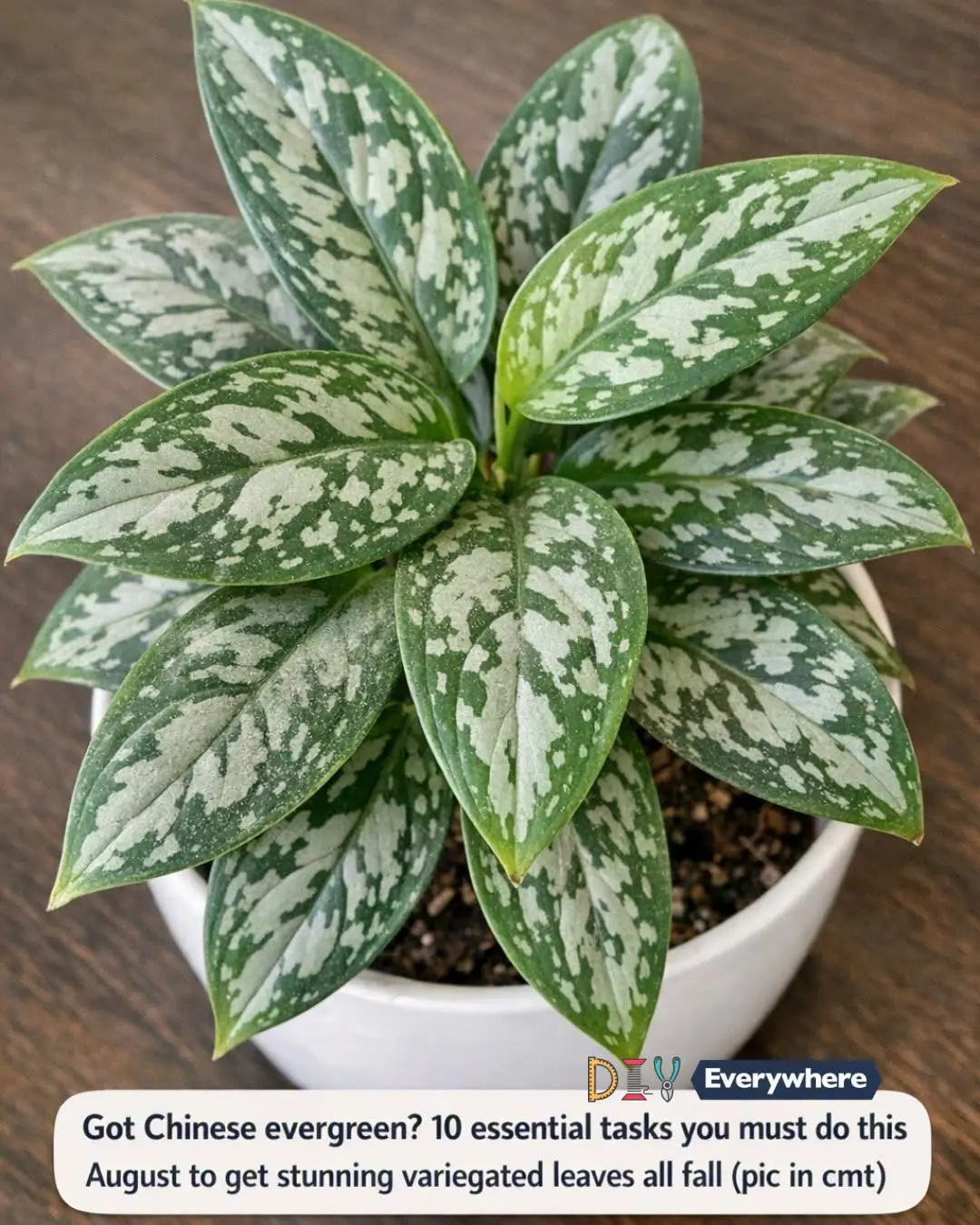
By the time August rolls around, I start looking harder at my houseplants than my garden beds. Out here in the Midwest, the tomatoes are sprawling, the beans are climbing, and the daylilies have about had their say—but inside, my Chinese evergreens are often just entering one of their prettiest seasons. If you want those leaves to stay crisp, colorful, and boldly variegated right through fall, August is the month to pay attention. A little timely care now can mean the difference between a plant that merely survives and one that glows from the corner of the room come October.
I’ve grown Chinese evergreen for years because it’s one of those faithful plants that forgives a busy week and doesn’t complain much, but I’ve learned not to mistake easygoing for no-care-at-all. Late summer brings longer warm spells indoors, shifting light, dust from open windows, and sometimes a tired potting mix that’s done all it can do. These are the August jobs I never skip if I want handsome variegated leaves all fall, and I’ll walk you through each one plainly, the way I’d explain it across my kitchen table with a cup of coffee nearby.
1. Move it into brighter, indirect late-summer light
Variegated Chinese evergreen leaves need more light than solid green ones to hold their pattern well. In August, I like to reassess where each pot is sitting because the angle of the sun is already beginning to change. A spot 3 to 6 feet from an east-facing window is often ideal. Near a north window can work too, especially for lighter varieties with silver, cream, pink, or chartreuse markings. If you only have a south or west window, keep the plant back 5 to 8 feet, or filter the light with a sheer curtain.
What you are after is bright, indirect light for at least 6 to 8 hours a day. If the leaves look washed out, scorched, or papery on the side facing the window, the light is too harsh. If new growth comes in smaller, darker, or less patterned than older leaves, the plant may be too dim. I once had a lovely silver variety sitting on a pie safe in a dark corner, and while it stayed alive just fine, it lost that sparkly marbling that made it special. Moving it only a few feet closer to morning light made all the difference within a month.
2. Rotate the pot a quarter turn every week
This sounds simple because it is, but it’s one of the easiest ways to keep your plant full and evenly colored. In August, Chinese evergreen often puts on a last strong push of growth before indoor light levels drop in autumn. If one side gets all the light, that side will grow fuller and the whole plant can begin leaning.
I rotate mine about a quarter turn every 7 days. If I’m likely to forget, I do it every Sunday after watering rounds. Over 4 weeks, the plant makes one full circle, and the canopy stays balanced. Better balance means more leaves are exposed to good light, and more light means better variegation. It’s a homely trick, but useful—like turning biscuits halfway through baking so they brown evenly.
3. Deep-water correctly, then let the top inch dry
August heat can make us overdo watering, especially if the house feels stuffy or the porch is warm. Chinese evergreen likes evenly moist soil, but not soggy roots. The best rule I know is to water thoroughly, then wait until the top 1 inch of the potting mix feels dry before watering again. In a 6-inch pot, that may mean every 7 to 10 days in late summer. In a brighter room or with air conditioning running, it could be every 5 to 7 days. In lower light, it may stretch to 10 to 14 days.
When you water, do it deeply enough that excess drains from the bottom—usually about 1 to 2 cups for a 6-inch nursery pot, though the exact amount depends on your mix. Empty any saucer after 10 minutes so the roots do not sit in water. Yellow lower leaves can point to overwatering, while drooping with dry, curling leaf edges can suggest the plant stayed dry too long. If you’re unsure, stick your finger into the mix or use a wooden chopstick as a moisture probe. Dry wood comes out clean; damp soil leaves a mark.
4. Raise humidity without turning the room swampy
Chinese evergreen tolerates ordinary household humidity, but variegated leaves look noticeably fresher when the air is not too dry. August can be funny in the Midwest: muggy outdoors, yet dry indoors once the air conditioner keeps humming. If leaf tips are browning or crisping, low humidity may be part of the trouble.
I aim for 40% to 60% humidity. A small room humidifier set nearby is the steadiest solution. You can also group plants together to create a slightly more humid pocket of air. A pebble tray helps a little if the pot sits above the waterline, not directly in the water. I don’t rely on occasional misting; it dries too quickly to do much good and can leave spots on the leaves. The goal is steady air moisture, not a brief splash. Think of it as the difference between a good simmer and a flash in the pan.
5. Feed lightly with a balanced fertilizer before growth slows
August is usually the last month I give Chinese evergreen a regular feeding before easing off in fall. If your plant has been growing since spring and you want good leaf color into autumn, a light application now can help support healthy new foliage. Use a balanced liquid houseplant fertilizer, such as 10-10-10 or 20-20-20, diluted to half strength. For many products, that works out to about 1/2 teaspoon per gallon of water, but always check the label.
Apply it once in August to already-moist soil, never bone-dry soil, to avoid stressing the roots. If your plant was repotted within the last 6 to 8 weeks into fresh mix, you can usually skip feeding because new potting soil often contains enough nutrients for the time being. Too much fertilizer can dull variegation, brown leaf edges, or leave white crust on the soil surface. With Chinese evergreen, gentle and steady always beats pushing for fast growth.
6. Clean every leaf so it can actually use the light
By August, I find a surprising amount of dust on houseplant leaves, especially if windows have been open or there’s a gravel driveway nearby as there is at my place. Dust blocks light, and on a variegated plant that matters. Those pale sections of the leaf already contain less chlorophyll, so they need all the help they can get.
I wipe each leaf with a soft damp cloth, supporting the underside with one hand so I don’t crease it. Use plain lukewarm water, or if the leaves are especially grimy, add just a drop of mild soap to a quart of water and then wipe again with plain water. Don’t use leaf shine products. They can clog the leaf surface and leave an unnatural look besides. This task takes 10 minutes on a medium-sized plant and can brighten it more than folks expect. It’s the houseplant version of washing your best windows before company comes.
7. Inspect closely for spider mites, mealybugs, and scale
Late summer is a prime time for pests, especially if you’ve had plants near open windows, on a shaded porch, or close to other houseplants. Chinese evergreen can attract spider mites, mealybugs, and scale, and all three can leave foliage looking dull, stippled, sticky, or weak. Check the undersides of leaves, where the leaf meets the stem, and around the crown of the plant.
Spider mites often leave fine webbing and tiny pale speckles. Mealybugs look like bits of cotton tucked into joints. Scale appears as small brown or tan bumps that don’t move. If I spot only a few pests, I remove them first by hand with a cotton swab dipped in 70% isopropyl alcohol. Then I wash the leaves and stems and follow up with insecticidal soap every 7 days for 3 treatments. Isolation matters too—keep the plant 3 to 6 feet away from others until you’re sure the problem is gone. Catching pests early preserves leaf color and saves you a heap of trouble later.
8. Trim yellow, damaged, or plain green leaves strategically
In August, I do a little tidying, but not a hard pruning. Remove any yellow leaves, torn leaves, or those badly scarred by sun or pests. Use clean scissors or pruners wiped with rubbing alcohol. Cut the leaf stem close to the base without gouging the crown. This improves appearance, yes, but it also helps the plant direct energy toward healthier foliage.
On highly variegated varieties, I also keep an eye out for stems producing mostly plain green leaves. Those greener leaves photosynthesize efficiently, which sounds helpful, but they can outgrow the more colorful portions and change the look of the plant over time. If one stem is clearly reverting and spoiling the balance of the plant, I cut it back to the base or to a lower node with better coloration. I do this sparingly. A plant still needs enough foliage to stay strong. Think of it as shaping, not shearing.
9. Refresh the top 1 to 2 inches of potting mix
If you don’t want to fully repot in August—and I often don’t unless the plant truly needs it—you can still give the roots a little kindness by refreshing the top layer of soil. Over time, the upper inch gets compacted, collects fertilizer salts, and can become water-repellent. Gently scrape away the top 1 to 2 inches with a spoon or small hand fork, being careful not to injure shallow roots.
Replace it with fresh indoor potting mix amended with a bit of perlite or fine orchid bark for airflow. A good blend is roughly 2 parts potting mix to 1 part perlite. This helps water penetrate better and gives the plant a cleaner root zone heading into fall. If you notice a white crust on the surface, definitely do this job. It’s a modest fix, but one I’ve seen perk up tired plants in a week or two.
10. Repot only if roots are circling hard or pushing out of the drainage holes
The headline says August tasks, and sometimes August is indeed the moment to repot—but only if the plant truly needs it. Chinese evergreen prefers being a bit snug in its pot. If you see roots emerging from the drainage holes, roots circling densely around the root ball, or water running straight through without soaking in, then repotting may be worthwhile.
Move up just 1 pot size, usually from a 6-inch pot to a 7- or 8-inch pot. Too large a jump leaves excess wet soil around the roots and raises the risk of rot. Use a well-draining mix: 2 parts quality indoor potting soil, 1 part perlite, and 1 part fine bark is a sturdy combination. After repotting, water thoroughly and keep the plant out of any direct sun for 7 to 10 days while it settles in. I do not fertilize for about 4 weeks after repotting. Fresh mix is enough to start with.
11. Keep temperatures steady and protect it from drafts
Chinese evergreen is happiest between 65°F and 80°F. August can bring temperature swings indoors from strong air conditioning during the day and open windows at night. Sudden chills or blasts of dry air from vents can stress the foliage and leave the edges looking rough by September.
Keep the plant at least 2 to 3 feet away from AC vents, exterior doors that open often, or drafty windows. If you set it outside for a summer spell, bring it in before nights drop below 60°F. That little bit of caution helps preserve both growth rate and leaf quality. A comfortable room for people in a cotton shirt is usually a good clue the plant will be comfortable too.
12. Start planning for shorter autumn days with supplemental light if needed
If your home gets dim in fall, August is the right time to think ahead instead of waiting for your plant to sulk in October. Variegated cultivars hold color best when they don’t experience a sudden drop in usable light. If your windows are shaded by porches, trees, or neighboring buildings, a small grow light can carry the plant beautifully into autumn.
A simple LED grow light placed 12 to 18 inches above the leaves for 10 to 12 hours a day is usually enough. You do not need anything fancy or blindingly bright. A modest full-spectrum bulb on a timer works well for one or two plants. I’m fond of practical solutions, and timers rank high on my list; they save fussing and keep things regular. Houseplants, like children and pie crust, often do best with consistency.
13. Watch the new growth for color clues
One of the best August habits is simply paying close attention to the newest leaves. They tell you what the plant needs before older leaves start complaining. New leaves should emerge clean, well-shaped, and with clear patterning appropriate to the variety. If they’re smaller than usual, your plant may need more light. If they’re pale with brown edges, fertilizer salts or irregular watering may be the issue. If they’re twisted or speckled, inspect for pests.
I like to check once a week while I water and wipe leaves. It doesn’t take long. Over the years, I’ve found that noticing changes early is half of successful plant care. The plant won’t tap you on the shoulder, but it does speak in its own way. August is when I listen a little closer.
14. Don’t force blooms—focus on foliage
Chinese evergreen sometimes produces a flower that resembles a small peace lily bloom: a pale spathe and spadix. Some folks enjoy them, but if your main goal is striking variegated leaves, I usually recommend removing the blooms as they appear. Flowering takes energy that could go into stronger foliage, especially late in the growing season.
Snip the flower stalk near the base with clean scissors. This is not strictly necessary, but on a plant grown for leaf beauty, it often helps keep the plant looking fuller and fresher. I treat it the way I pinch spent blossoms off annuals on the porch—less for survival, more for show and vigor.
15. Keep a simple August care rhythm and your fall plant will show it
If I had to boil all this down to one country-common bit of advice, it would be this: do a few things regularly instead of many things once in a panic. In August, that rhythm might look like this: check soil moisture every 4 to 5 days, rotate weekly, wipe leaves twice during the month, inspect for pests every time you water, fertilize once if needed, and adjust light before the season changes under your feet.
Chinese evergreen rewards steadiness. Give it bright indirect light, moderate water, clean leaves, and a little peace from drafts and pests, and those patterned leaves will carry your rooms into fall with real grace. I’ve always thought there is something comforting about a dependable plant that brightens the house just as the garden begins to soften. Tend yours now, in August, and come autumn you’ll be glad you did every time you pass by and see those handsome leaves catching the light.
